Our Mission
At Evergreen Underground Water Conservation District, our mission is to safeguard groundwater resources for the communities of Atascosa, Frio, Karnes, and Wilson counties. The District directs its efforts for the conservation, preservation, protection, recharging, and prevention of waste of groundwater in groundwater.
We care for
wells in our district.
Protecting & Managing Groundwater
The Evergreen Underground Water Conservation District (EUWCD) is dedicated to the conservation, protection, and management of groundwater resources in Atascosa, Frio, Karnes, and Wilson counties. As a locally governed entity, our mission is to ensure the long-term availability of groundwater for all landowners for generations to come.
Through a combination of regulation, monitoring, and stakeholder outreach, we work to balance the rights of private landowners with the continued growth in our district. EUWCD oversees well registrations, well permitting, monitors groundwater levels and usage, and enforces spacing and production rules to prevent overuse and contamination.
We also collaborate with state and regional water management agencies to support responsible groundwater planning. Whether you’re a landowner, stakeholder, or driller our goal is to provide the resources, guidance, and oversight necessary to protect this critical resource.
Well Permits or Exemptions
Certain wells in the Evergreen Underground Water Conservation District (EUWCD) must be registered or permitted, depending on their size and use. If your well is capable of producing more than 25,000 gallons per day (or 17.5 gallons per minute), or if it is used for public water supply, irrigation, commercial, or industrial purposes, a production permit is required before drilling or operating. All permitted wells must meet spacing requirements, follow production limits, and submit regular water use reports.
If you’re planning a new well or modifications, EUWCD can help determine if a permit is required and guide you through the process. For details on fees, renewals, and applications, visit our Fee Schedule or contact the District office .
Permit vs. Exempt
Permit vs. Exempt (6)
An exempt well is typically a small-capacity well that produces LESS THAN 25,000 gallons per day (about 17.5 GPM). These wells do not require a production permit, but they must be registered with the District.
A permitted well, on the other hand, produces MORE THAN 25,000 gallons per day. These wells require a production permit and are subject to spacing, production, and reporting rules.
Yes. If an exempt well is modified to produce more than 25,000 gallons per day, or its use changes (e.g., from domestic to commercial), it must be permitted by the District. Failure to update the status of the well can result in enforcement action. The District may also revoke an exemption if the conditions no longer meet the criteria under Rule 6.1.
Yes. All new wells must be reviewed by the District before drilling begins. The District will determine whether the well qualifies as exempt or requires a permit. Drilling without prior registration or a permit (as applicable) is a violation of District rules.
Yes. Existing wells that were never registered should be reported to the District as soon as possible. Registration helps protect your well from spacing conflicts and ensures compliance with state law. Unregistered wells are not protected by the District and may be subject to enforcement action.
Yes. All wells in the District must meet minimum spacing requirements from property lines and other wells. Spacing depends on well type, capacity, and whether it is exempt or permitted. The District enforces these requirements to protect existing wells and aquifer conditions.
The landowner (or well operator) is ultimately responsible for ensuring the well is registered or permitted correctly. However, licensed well drillers must also coordinate with the District and submit well reports after construction. Both parties should contact the District before drilling to avoid violations.
Aquifer Science & Monitoring
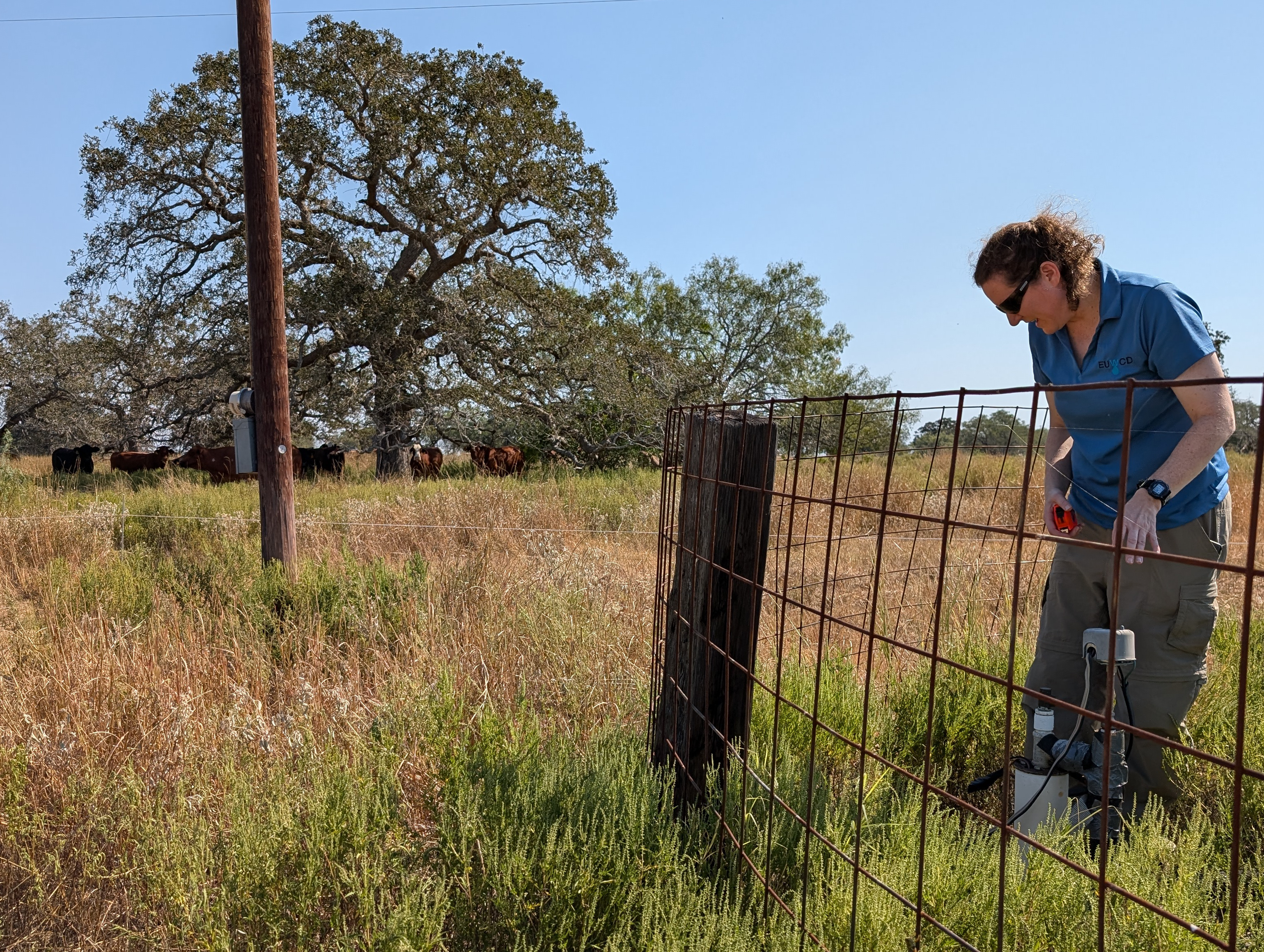
The EUWCD is committed to continuously collecting and analyzing data that affects the major and minor aquifers in our district. We collect and analyze data on groundwater levels, recharge rates, and long-term trends to support responsible water management.
Our monitor well network provides data on aquifer conditions, helping us track seasonal fluctuations, drought impacts, and overall water availability. This information is crucial for making informed decisions about groundwater conservation and ensuring a sustainable supply for future generations.
By combining scientific research with groundwater management, EUWCD helps landowners, policymakers, and stakeholders make informed choices about water use.
The District’s rules and management plan are based on the best available science, within the laws and rules in effect. The overall management goal will be a sustainable supply of water from local groundwater resources, while recognizing the need to balance protection of rights of private landowners with the responsibility of managing the area’s groundwater resources for future generations.

Atascosa, Frio, Karnes, and Wilson counties rely on the local groundwater supplies to meet their drinking water, industrial, agricultural, domestic, and livestock needs. The District believes this valuable resource can be managed in a reasonable manner through conservation, education, and regulation. The District directs its efforts for the conservation, preservation, protection, recharging, and prevention of waste of groundwater in groundwater reservoirs or their subdivisions.
The District’s rules and management plan are based on the best available science, within the laws and rules in effect. The overall management goal will be a sustainable supply of water from local groundwater resources, while recognizing the need to balance protection of rights of private landowners with the responsibility of managing the area’s groundwater resources for future generations.